
In 2017, three antique dealers in Silver City, New Mexico paid roughly $2,000 for the contents of an estate sale — furniture, boxes, and a painting that had been hanging behind a bedroom door for over three decades. Customers who wandered into the shop kept asking the same question: was that really a de Kooning?
It was. Willem de Kooning's Woman-Ochre had been sliced from its frame at the University of Arizona Museum of Art in 1985 and had vanished for thirty-two years — until three strangers, working from instinct and a little internet research, matched the painting on their wall to a stolen masterpiece. They called the museum immediately. A work now insured for more than $100 million, long resigned to the FBI's cold case files, was on its way home within days.
No one signed a certificate. No dealer's ledger recorded the transfer. A shop full of strangers' instincts recovered what three decades of investigation could not.
A signature authenticated the artist. A chain of ordinary people telling the truth about what they'd found authenticated its return.
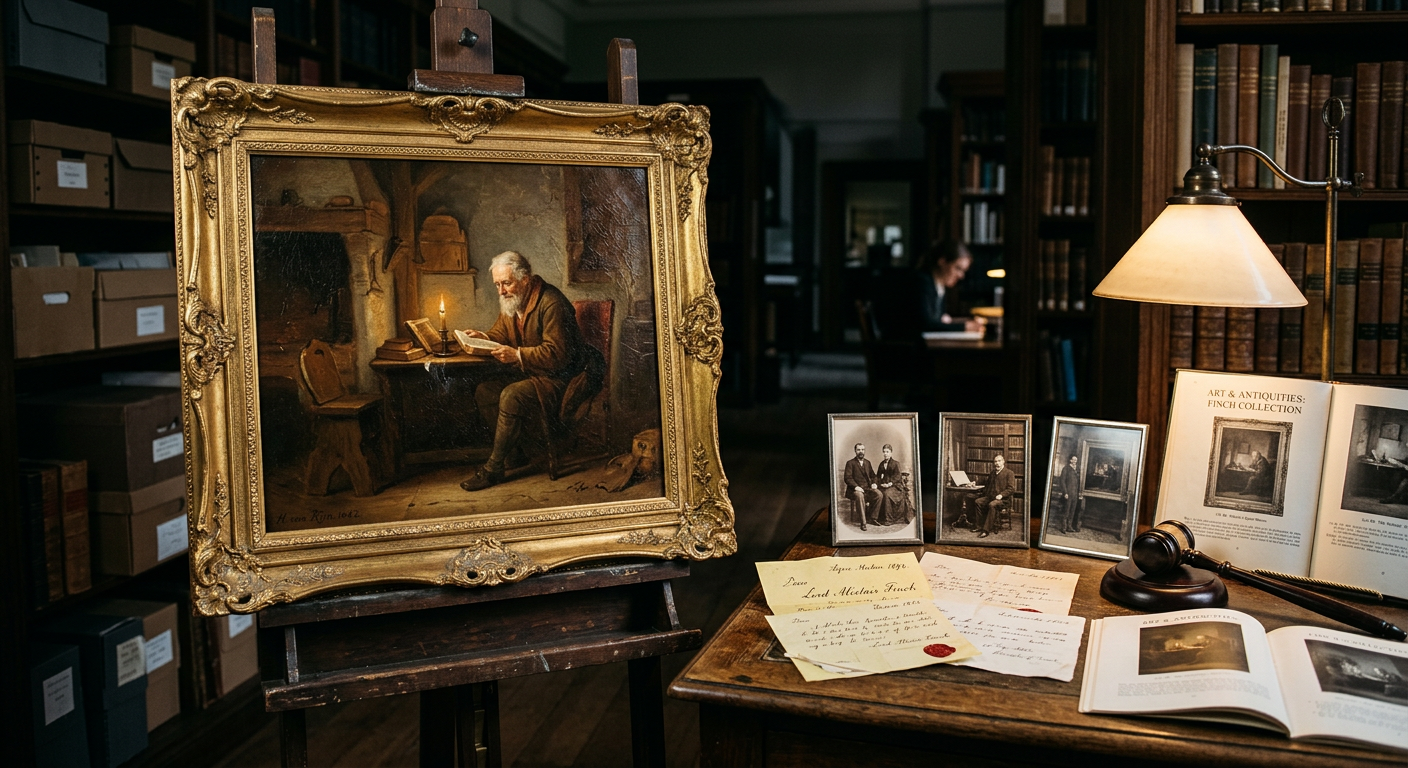
This is provenance in its truest sense: not a certificate, but a documented history made legible enough to survive its owners. In the art market, provenance is usually described in technical terms — the documented chain of ownership, exhibition history, literature citations, and expert certification that together tell an object's biography. That definition is accurate, but incomplete. Provenance is where art history, law, and human record-keeping converge — and increasingly, it is where value is made or unmade.
What Provenance Actually Means
At its core, provenance is the recorded history of who has owned an artwork, from the moment it left the artist's studio to the moment it reaches you. A complete provenance file typically documents four dimensions:
Pedigree — the ownership "chain," including notable past collectors, dealers, and prior sale records.
Exhibition history — where the work has been publicly shown, particularly in respected museums or galleries.
Literature coverage — citations in catalogues raisonnés, scholarly publications, or the recognised authoritative press.
Certification — physical or documentary testimony from the artist, estate, or independent experts affirming authenticity.
Together, these elements do more than satisfy due diligence. They transform an object into a document — one that can be cross-checked, trusted, and defended.
The Economics of Trust: What Provenance Is Actually Worth
For most of art history, provenance was treated as a formality, filed alongside a condition report and largely invisible to the final price. That has changed. A 2022 study published in Management Science, "In Art We Trust" (Li, Ma & Renneboog), examined auction records for oil paintings, watercolours, and prints, and found that strong, well-documented provenance:
Increased the probability of a work selling at auction by up to 4%.
Produced hammer price premiums of as much as 54% for works with strong literature citations.
Improved annualised returns by 5% to 16% compared with works lacking comparable documentation.
The inverse is equally telling. Even the suggestion of a clouded title — an ownership gap, an unresolved claim, an unverifiable exhibition record — can strip meaningful value off a work, because buyers are, in effect, pricing in litigation risk before they price in aesthetic merit.
This shift is visible in recent auction data. Single-owner collection sales — where provenance is coherent, narratively unified, and easy to verify — continue to command a disproportionate share of value at the major auction houses, often achieving prices well above estimate. Buyers are not simply purchasing an image. They are purchasing certainty.
Buyers are not simply purchasing an image. They are purchasing certainty.
When Provenance Fails: The Knoedler Gallery Scandal
Provenance's power cuts both ways, and few episodes illustrate this more starkly than the collapse of Knoedler & Company. Founded in 1846, Knoedler was, for over 165 years, one of the most respected galleries in New York — until it closed abruptly in 2011 amid revelations that it had sold roughly $60 million in forged paintings attributed to Abstract Expressionist masters including Mark Rothko, Jackson Pollock, and Robert Motherwell.
The forgeries themselves, later traced to a painter working from a home studio in Queens, were sophisticated. But what allowed them to move through one of the art world's most trusted galleries was a fabricated provenance: the invented story of a mysterious collector, referred to only as "Mr. X," who had supposedly amassed the works directly from the artists in the 1950s and 1960s. Collectors who later discovered the truth — including one who had paid $8.3 million for a fake Rothko — spent years in litigation. The final related lawsuit was not settled until 2019, eight years after the gallery's closure.
Trust, once the currency of the art market, must be earned through evidence, not narrative alone.
The lesson is not that provenance can be faked — most collectors already assume forgers are capable of that. The lesson is that a plausible story, absent rigorous independent verification, can override the scepticism of even highly sophisticated buyers and respected institutions.
When Provenance Is Contested: The 2026 Modigliani Restitution
Provenance is not only an economic question; it is frequently a moral and legal one. In April 2026, a New York State Supreme Court judge ordered dealer David Nahmad to return Amedeo Modigliani's Seated Man with a Cane (1918) to the heirs of Oscar Stettiner, a Jewish art dealer who fled Paris in 1939 as Nazi forces advanced, leaving the painting behind under duress.
The work resurfaced decades later and was acquired in 1996 by a holding company connected to the Nahmad family — a sale that relied on a provenance record the court found had obscured the painting's history during the Nazi era. The case closed an eleven-year legal battle, and the court scheduled a further hearing to determine compensation owed to the heirs.
The ruling arrived within weeks of the Holocaust Expropriated Art Recovery Act of 2025 being signed into law in the United States, removing the sunset clause on the original 2016 HEAR Act and closing several defences that had previously slowed restitution claims.
Cases like this are a reminder that provenance research is not bureaucratic box-ticking. For heirs, it can be the difference between permanent loss and long-overdue recovery. For institutions and collectors, it is an ethical obligation as much as a legal one — and for the market as a whole, it reinforces why every acquisition deserves rigorous, independent history-checking before, not after, a transaction.
Practical Insight: What Collectors Should Actually Do
For private collectors, corporate collections, and institutions alike, provenance due diligence should never be treated as a closing formality. In practice, this means:
Request full documentation before, not after, purchase. Ownership records, prior sale invoices, exhibition catalogues, and any existing certificates of authenticity should be reviewed by an independent advisor — not solely the seller's own paperwork.
Cross-reference against catalogues raisonnés and museum archives. Where a catalogue raisonné exists for the artist, a work's absence from it, or discrepancies with recorded details, warrants further investigation rather than dismissal.
Treat gaps, not just red flags, as risk. The Knoedler case succeeded for as long as it did partly because buyers accepted an explained absence of provenance rather than demanding verifiable presence. A missing decade in a work's history is not automatically disqualifying, but it should always be investigated.
Screen against restitution databases. Works with Central European, wartime European, or colonial-era history should be checked against known claims registries as a matter of routine, not exception.
Commission independent condition and authentication assessment. Provenance and physical condition are related but distinct disciplines; a work with immaculate paperwork can still carry undisclosed conservation issues that affect both value and longevity.
This is, fundamentally, where art advisory earns its keep — not in closing a sale quickly, but in ensuring a collector never has to unwind one.
The Story Worth Verifying
Provenance is often described in the language of paperwork — records, catalogues, certificates. But at its heart, it is the discipline of taking an object's story seriously enough to verify it. That verification protects buyers from fraud, protects heirs from permanent loss, and protects the historical record itself from quiet erasure.
As the Silver City discovery shows, provenance can also simply return a missing work to where it belongs. As the market data shows, it can add or erase substantial value in a single transaction. And as the Knoedler and Modigliani cases show, the cost of getting it wrong is rarely only financial.
At I'Arte Rinasce, we believe every artwork carries a story worth preserving. Whether you require conservation, restoration, authentication, valuation, or collection advisory services, our team is committed to safeguarding cultural and artistic legacies for future generations.
Contact I'Arte Rinasce for a confidential consultationFrequently Asked Questions
What is provenance in the art market?
Provenance is the documented history of an artwork's ownership, from the artist's studio to its current owner. A complete provenance file typically covers pedigree (chain of ownership), exhibition history, literature citations, and certification by the artist, estate, or independent experts.
How much can provenance affect an artwork's price?
Research published in Management Science ("In Art We Trust," 2022) found that strong, well-documented provenance increased the likelihood of a sale by up to 4%, produced hammer price premiums as high as 54% for works with strong literature citations, and improved annualised returns by 5% to 16%.
What happened in the Knoedler Gallery forgery scandal?
Knoedler & Company, a 165-year-old New York gallery, closed in 2011 after selling roughly $60 million in forged Abstract Expressionist paintings backed by a fabricated provenance story involving a fictional collector known as "Mr. X." Litigation over the fakes continued until 2019.
What is the HEAR Act and why does it matter for restitution?
The Holocaust Expropriated Art Recovery Act, originally signed in 2016, gave claimants more time to pursue Nazi-era looted art cases by limiting certain legal defences. The Act of 2025 removed the original sunset clause and further restricted defences such as laches, strengthening claimants' ability to pursue restitution.
How should collectors verify provenance before buying?
Independent advisors should review original documentation rather than relying solely on the seller's paperwork, cross-reference the work against catalogues raisonnés and museum archives, screen against restitution claims databases, and commission an independent condition and authentication assessment.
What are red flags in an artwork's ownership history?
Unexplained gaps in ownership, reliance on a single unverifiable source for a work's early history, and exhibition or literature claims that cannot be cross-checked are all reasons for further investigation rather than automatic disqualification.
Can a work with excellent paperwork still be a forgery?
Yes. The Knoedler scandal demonstrated that a plausible, well-told provenance story can pass through even sophisticated buyers and respected institutions without independent verification. Documentation must be checked against primary sources, not simply accepted at face value.
Why does provenance matter for museums and institutions, not just collectors?
Institutions carry a public trust obligation. A misattributed or improperly sourced work can expose a museum to legal claims, reputational damage, and loss of public confidence — making provenance research as much an ethical responsibility as a legal one.
