
Provenance
Understanding Provenance: Why History Matters
The chain of ownership behind an artwork is as important as the work itself. We examine why provenance research is essential for collectors and institutions alike.
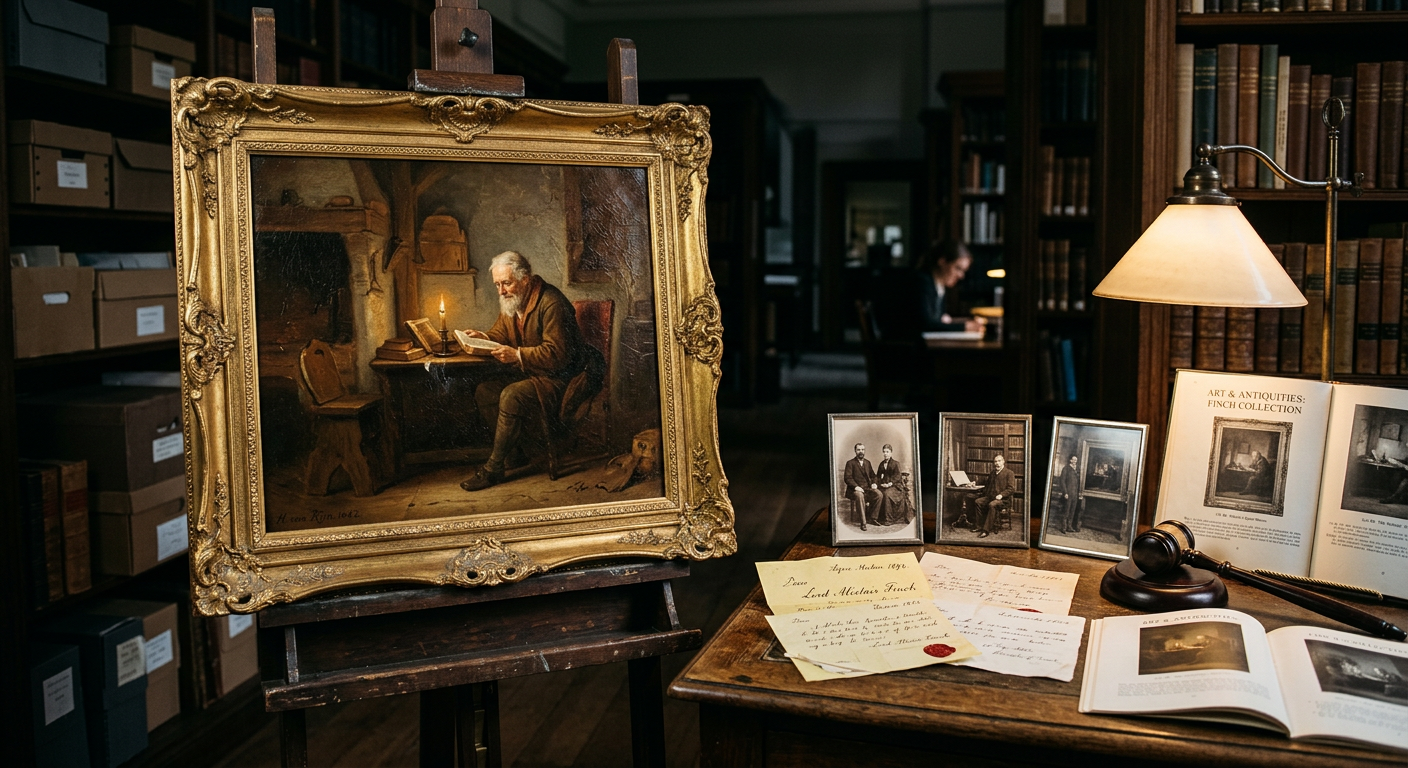
Every work of art has two histories. The first is the history of its making — the artist, the materials, the moment of creation. The second is the history of its survival: where it has been, who has owned it, how it has passed from hand to hand across the years and centuries. This second history is what we call provenance, and for the serious collector or institution, it is every bit as important as the first.
The word itself comes from the French provenir — to come from. A provenance record is, at its most basic, a list of owners: who bought the work, when, from whom, and for how much. But in practice it is far more than a list. It is a document of cultural transmission — of the ways in which objects move through societies, cross borders, survive upheavals, and accumulate meaning along the way.
What Provenance Is
A complete provenance record will typically include the names of all known owners, the dates of each transfer, the means of transfer (sale, gift, bequest, inheritance), and references to any relevant documentation — sale catalogues, exhibition records, correspondence, inventories. For older works, this record may stretch back centuries; for contemporary works, it may be a matter of a few transactions.
In practice, very few works have complete provenance records. Archives are lost, records are incomplete, transactions go undocumented. A provenance that begins in the mid-twentieth century, with no earlier history, is not necessarily suspicious — it may simply reflect the realities of documentation before the modern era. What matters is not completeness per se, but the quality of the evidence that does exist, and the plausibility of the account it tells.
The Gaps That Matter
Not all gaps in provenance are equal. A missing decade in the eighteenth century is very different from a missing decade between 1933 and 1945. The period of the Second World War, and the years immediately preceding it, represents the most significant provenance challenge in the art market today. The systematic looting of Jewish-owned collections by the Nazi regime, and the subsequent dispersal of those works through the European and American art markets, means that a great many works now in private and institutional collections were acquired under duress or stolen outright.
The 1998 Washington Principles on Nazi-Confiscated Art established a framework for identifying and resolving such claims, and most major institutions now conduct systematic provenance research on their holdings. But the problem is far from resolved. Thousands of works remain in collections without adequate provenance documentation for the wartime period, and new claims continue to emerge.
"Provenance is not merely a legal formality. It is an ethical commitment — to the full history of the object, and to those whose history it carries."
Wartime Displacement
The Nazi looting of art is the most extensively documented case of wartime cultural displacement, but it is not the only one. The upheavals of the twentieth century — revolution, colonial dispossession, civil conflict — have left their marks on the provenance of objects across many cultures and periods. The ongoing debates around the repatriation of objects held in Western museums reflect a growing recognition that provenance is not only a matter of legal title, but of cultural justice.
For the private collector, these questions may seem remote. But they are not. The same principles that apply to institutional collections apply to private ones: the obligation to understand the history of what you own, and to act responsibly when that history raises questions.
Due Diligence in Practice
Before acquiring any significant work, a collector should request full provenance documentation and check the work against the major databases of stolen and looted art: the Art Loss Register, the Interpol database, and the databases maintained by national cultural property offices. These checks are not infallible — not all stolen works are registered — but they are a necessary minimum.
For works with gaps in their wartime provenance, more extensive research may be warranted: consulting archives, engaging specialist provenance researchers, or seeking a legal opinion. This is not a counsel of paralysis — most works with incomplete provenance are not stolen. It is a counsel of care: the art market functions on trust, and that trust depends on the willingness of buyers and sellers to ask difficult questions.
Provenance as Biography
Beyond its legal and ethical dimensions, provenance is simply interesting. To know that a painting hung in a particular house, was admired by a particular person, passed through a particular sale — this is to understand something about the life of the object that no amount of formal analysis can provide. Provenance connects the work to the world it has moved through, and in doing so, enriches our experience of it.
Some of the most compelling provenance stories are also the most sobering. A work that passed through a forced sale in Vienna in 1938; a drawing that was hidden in a farmhouse during the occupation; a sculpture that was looted, recovered, and returned — these histories are part of the work now, inseparable from it. To own such an object is to be the custodian not only of the art, but of the story.
The Collector's Obligation
Provenance research is not a burden imposed on collectors from outside. It is an expression of the same values that lead people to collect in the first place: a respect for objects, a curiosity about their histories, a commitment to their preservation. The collector who investigates provenance carefully is not being cautious — they are being serious.
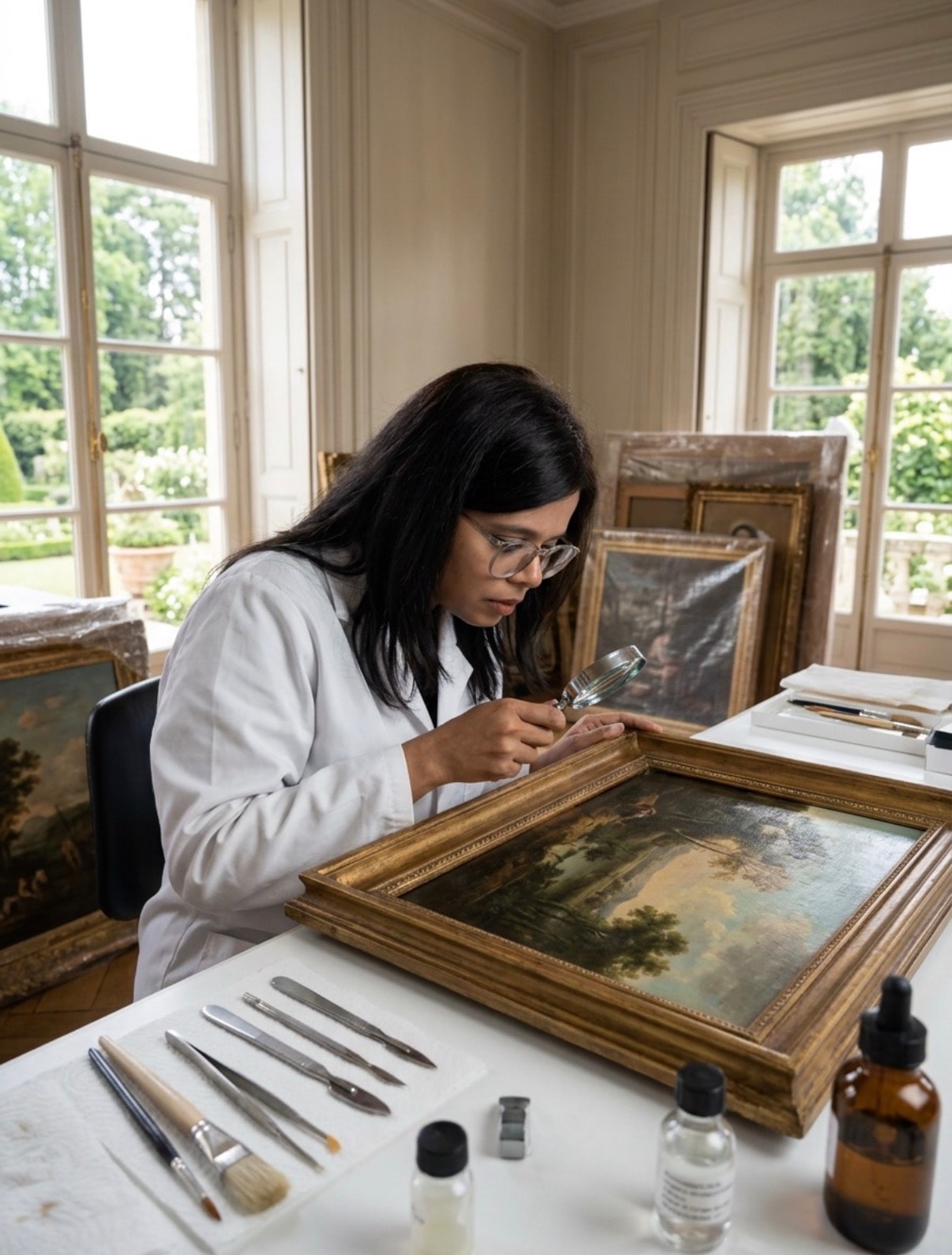
At I'Arte Rinasce, provenance research is integral to everything we do — in acquisition advice, in conservation work, in the documentation we maintain for every object in our care. We believe that understanding where a work has been is inseparable from understanding what it is. History matters. It always has.
Editorial Team I'Arte Rinasce

