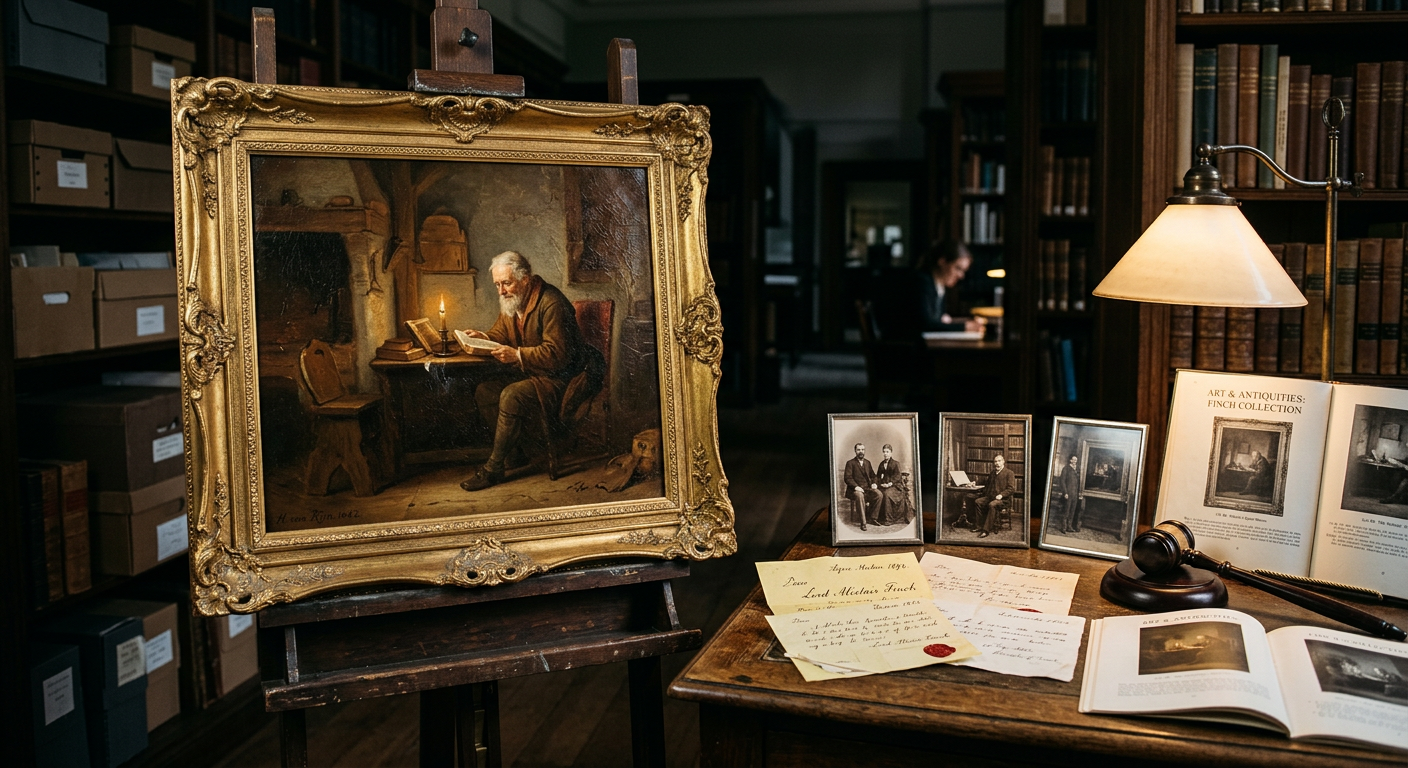
Deloitte and ArtTactic put a number on it: roughly $992 billion in art and collectibles will pass between generations over the next decade. That figure has been circulating as proof of a coming flood of art hitting the market — but the data tells a more measured story. Most inherited work doesn't get sold. It passes to a spouse, sits in a trust, secures a loan, or simply stays in the family. A recent Art Basel and UBS survey found only 17% of people who inherited art no longer held any of it.
Still, the math is uncomfortable. The global art market moves about $59.6 billion a year. Even a modest 10% of that $992 billion selling off evenly over ten years adds roughly $9.9 billion in new annual supply. At 20%, that's $19.8 billion — a third again on top of the market's current size. The market can catalogue that kind of volume without much trouble. Finding real demand for it at a price anyone's happy with is a different problem entirely.
Supply isn't the only thing changing hands. So is the story behind every one of those works.
I don't think the story ends there, though. I think it starts there — because supply isn't the only thing changing hands. So is the story behind every one of those works. And in twenty years of moving between conservation studios and collectors' homes, I've learned that the story is usually what decides a piece's fate, long before price does.
Source data: Deloitte Private & ArtTactic Art & Finance Report 2025; The Art Basel & UBS Survey of Global Collecting 2025; The Art Basel & UBS Global Art Market Report 2025.
Not Every Work Faces This Transfer Equally
The pressure won't land evenly. Trophy works may actually benefit — decades out of view can build appetite, not erode it. But secondary examples, difficult formats, and artists whose market has quietly depended on an aging generation of loyal collectors are the ones likely to see sharper discounts, or simply no bidders at all.
And this is exactly where condition and documentation decide outcomes. A trophy piece with gaps in its conservation history can still find a home — someone will do the diligence because the upside justifies it. A secondary piece with the same gaps often won't get that chance. Nobody spends the money to solve an information problem on a work that was already a marginal buy.
It just doesn't sell. Sometimes it doesn't even make it to sale — I've watched families quietly let go of genuinely good art because nobody in the room could vouch for what it needed or what had been done to it.
Nobody spends the money to solve an information problem on a work that was already a marginal buy.
Who Actually Controls What Happens Next
The people around this transfer are not equally positioned. Auction houses get access to estate pipelines, but they're also taking on more guarantee risk than usual. Galleries may end up custodians of an artist's estate without keeping the relationships that made the work sellable in the first place. Artists themselves can watch their public prices reset in a soft resale market and see none of the proceeds.
Meanwhile advisers, insurers, lenders, registrars, and collection-management platforms often profit from the transfer before a single piece ever reaches an auction floor.
Conservation sits quietly inside all of it — usually invisible until someone needs it, and then suddenly decisive. A condition report can be the difference between a work moving smoothly through an estate and a work getting stuck, disputed, or discounted into irrelevance.
What This Means If You're Holding a Collection Right Now
If you're a collector, the most useful thing you can do for your collection's future isn't necessarily your next acquisition — it's the paperwork most people leave undone.
Keep a conservation file for every significant piece: treatment history, materials used, the environment it's lived in.
Get condition reports done periodically, not only at the point of sale.
Talk to your heirs now. Tell them what you have and why it matters — provenance only protects a piece if someone knows to ask for it.
None of this guarantees a market. But it turns what could be a burden into a real choice for whoever inherits the decision.
The Bigger Question
This wealth transfer isn't just a story about how much supply is coming. It's a story about who gets to decide what happens between inheritance and sale — and which parts of the canon the next generation chooses to preserve, finance, donate, or quietly let go of.
The best gift you can leave the next generation isn't the art itself. It's the story that makes the art make sense.
At I'Arte Rinasce, we believe every artwork carries a story worth preserving. Whether you require conservation, restoration, authentication, valuation, or collection advisory services, our team is committed to safeguarding cultural and artistic legacies for future generations.
Contact I'Arte Rinasce for a confidential consultationFrequently Asked Questions
How much art wealth is expected to transfer between generations?
The Deloitte Private and ArtTactic Art & Finance Report 2025 estimates roughly $992 billion in art and collectibles will change hands over the next decade, based on projections that up to 1.2 million individuals worth over $5 million will transfer nearly $31 trillion in total wealth, of which an estimated 5% is held in art and collectibles.
Will this wealth transfer flood the art market with new supply?
Not necessarily. The $992 billion figure describes ownership transfer, not art offered for sale — most inherited work passes to a spouse, moves into a trust, secures a loan, or stays with the family. The Art Basel & UBS Survey of Global Collecting 2025 found only 17% of inheritors no longer held any of what they received.
Why do people sell inherited artworks?
Reasons tend to be practical rather than aesthetic. Lack of space to display or store the work and the need to help settle estate taxes are among the most commonly cited reasons for selling inherited pieces.
Which works are most at risk in this transfer?
Trophy works tend to hold or gain appetite even after years off the market. Secondary examples, difficult formats, and artists whose market has depended on an aging, loyal collector base are more exposed to discounting or a lack of bidders.
How does conservation documentation affect an inherited collection's value?
Condition and treatment history often decide whether a work sells smoothly or gets stuck in dispute. Buyers will fund diligence on a trophy work with documentation gaps because the upside justifies it; the same gaps on a secondary work frequently mean it simply doesn't sell.
Who benefits most from the coming wealth transfer?
Auction houses gain access to estate pipelines but take on more guarantee risk. Advisers, insurers, lenders, registrars, and collection-management platforms often profit from the transfer process itself, ahead of any eventual sale.
What should collectors do to prepare their collection for inheritance?
Maintain a conservation file for significant works (treatment history, materials, display and storage environment), commission condition reports periodically rather than only at sale, and talk to heirs now about what the collection contains and why it matters.